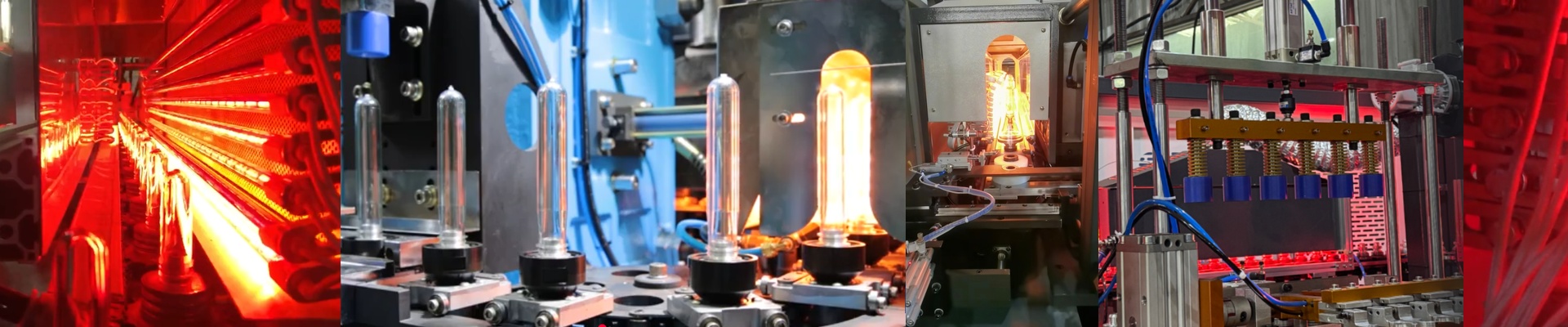
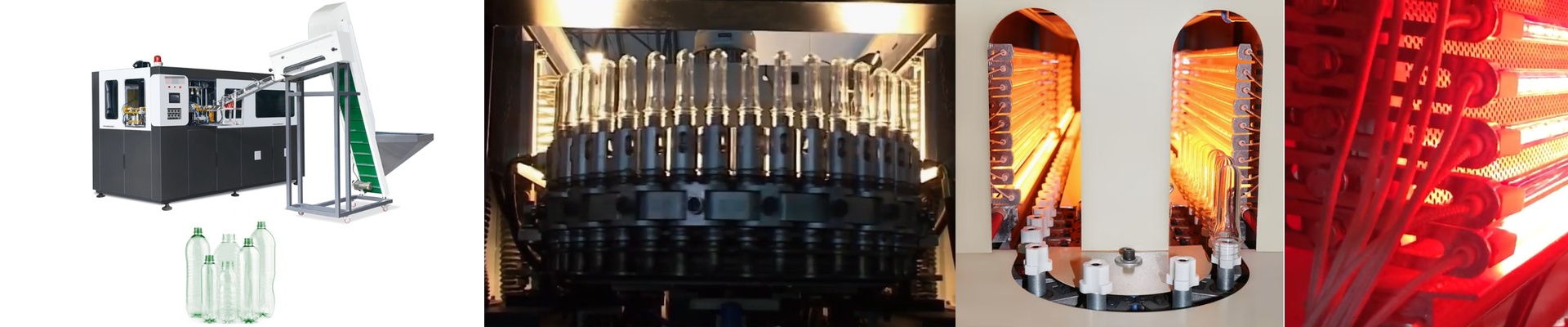
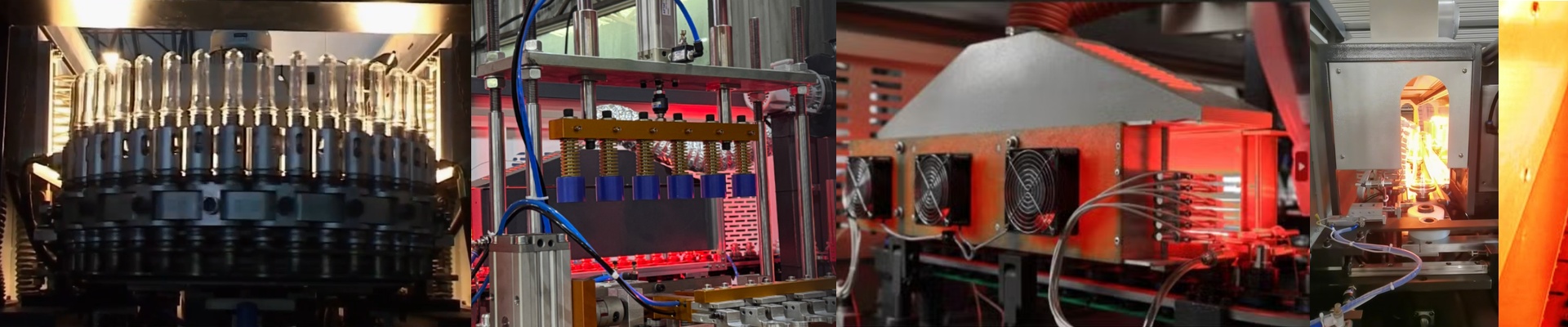
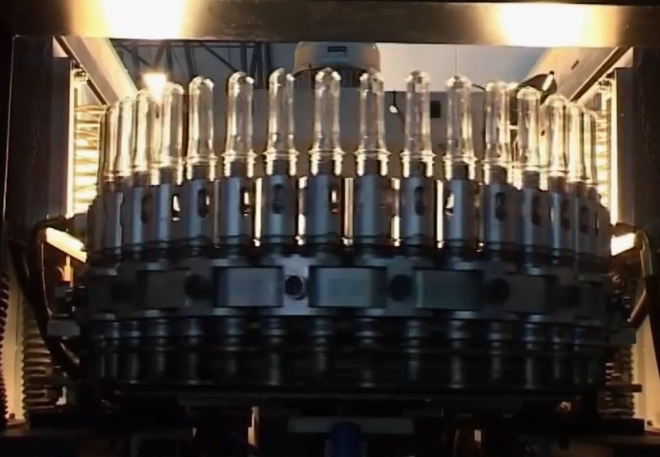
On the plant floor, one blown bottle reject or a sudden heating fault on your Amsler blow molder brings the line to a halt. Preforms don’t stretch evenly, the heating tunnel starts chasing temperature, and you’re stuck troubleshooting an aging lamp assembly instead of running bottles. We built our replacement lamp for Amsler machines to get you back to stable, repeatable heating—no re-engineering required.
What matters technically
Our emitter is a direct 1:1 fit for Amsler blow molders and matches the key heating parameters used across Sidel, Krones, SIPA, Husky, SACMI, and Nissei ASB machines. Power density and spectral response match standard halogen/quartz infrared systems: 1,500 W to 3,000 W per lamp, 230 V or 400 V configurations, and filament geometry that repeats the heat profile. Dimensions are held to OEM tolerances, including common end-cap types and R7s connectors, so it drops into existing sockets and reflectors without modification. The quartz envelope handles continuous high-temperature operation, and we keep the emitted wavelength consistent so preform surface heating stays uniform—critical for stretch consistency and bottle weight control.
Why it works on the line
Infrared heating is the heartbeat of stretch blow molding. When lamp output drifts, you get cold spots, crystallization issues, and inconsistent biaxial orientation. Our replacement restores the intended heating curve, so the tunnel holds setpoint with less oscillation. That means fewer rejects, steadier cycle times, and less scrap. It also cuts energy waste from over-driving older emitters. In practice, we see stable output through 5,000+ hours with minimal drop-off, so you swap lamps less and keep throughput up.
The practical details
Installation is straightforward—match the voltage, connector, and orientation to the existing lamp—but the heating tunnel is a harsh environment. Make sure the reflector is clean and undamaged; a pitted reflector scatters energy and will hide even the best lamp. Confirm your power supply matches the lamp rating, because mismatched voltage puts premature stress on the filament. And pair the lamp with proper temperature sensing and closed-loop control; the best emitter still needs accurate feedback to keep the preform wall thickness profile in spec.