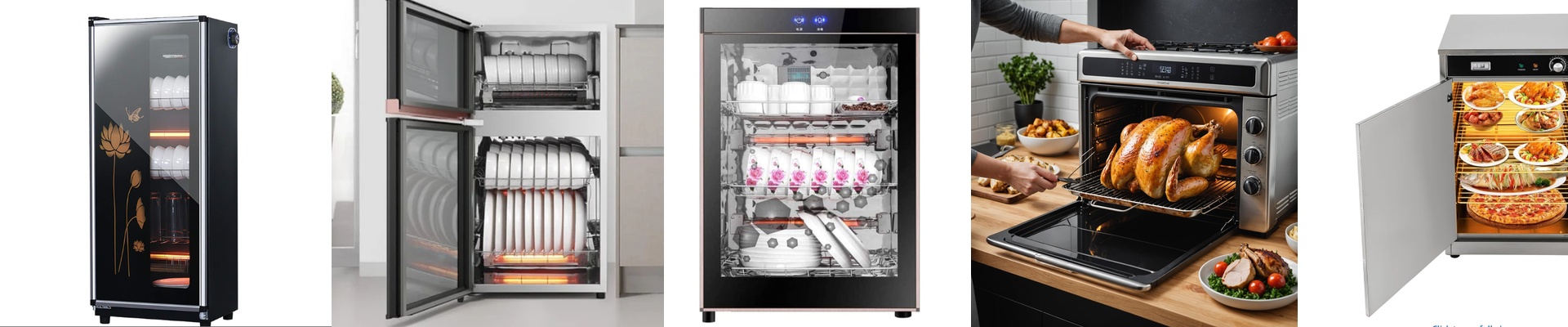
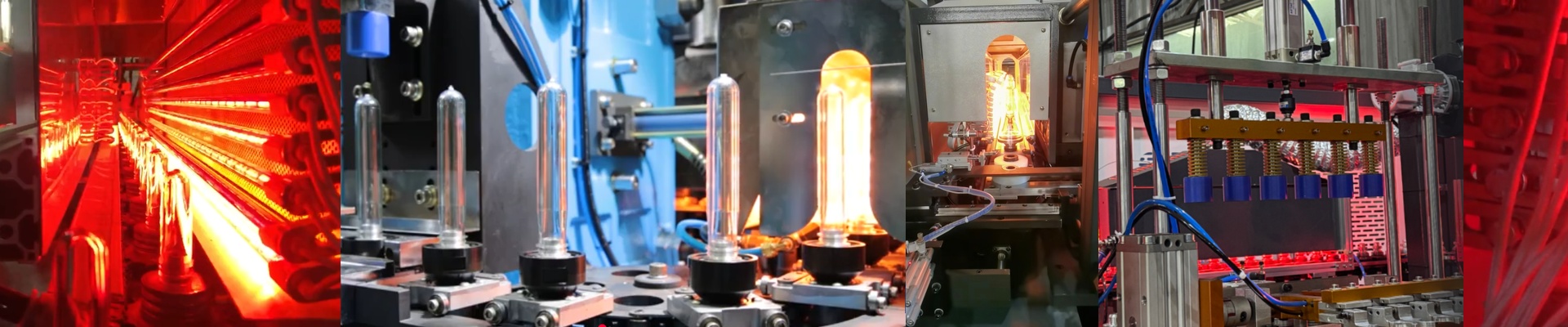
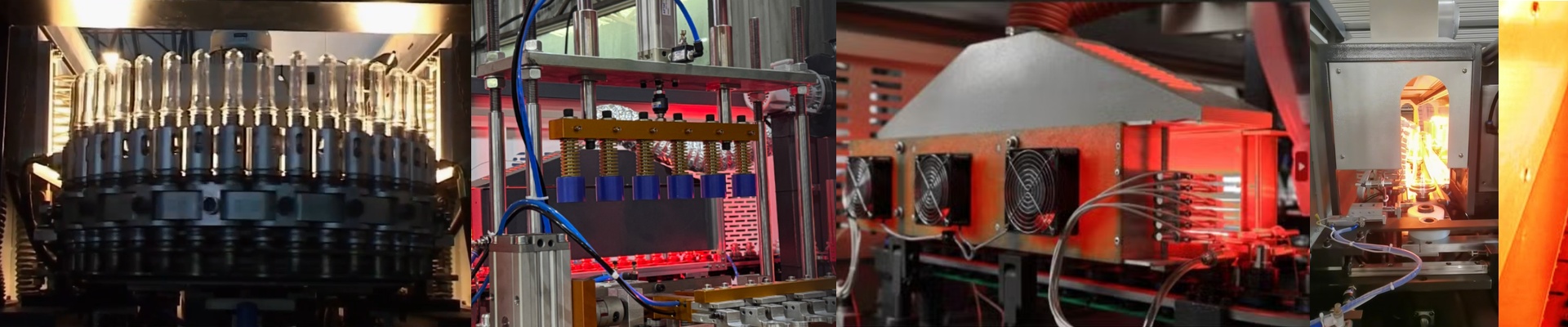
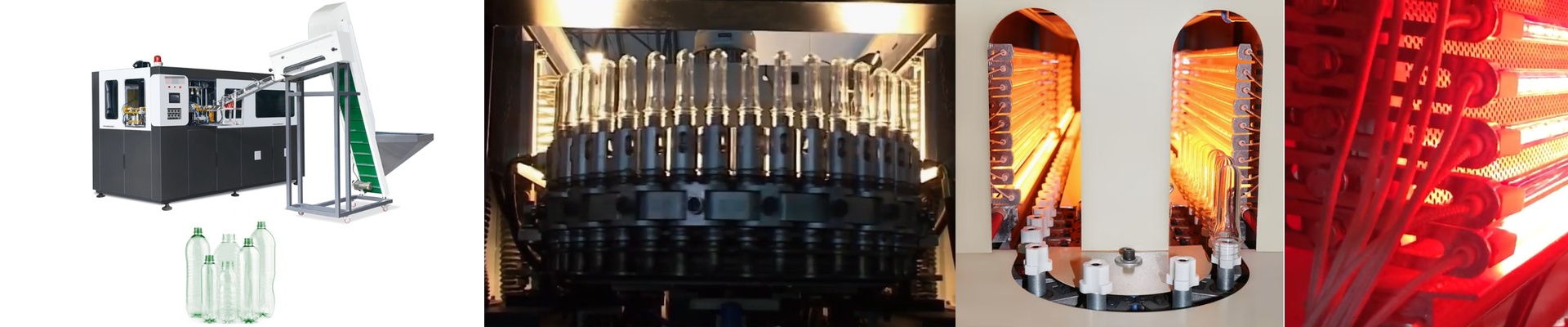
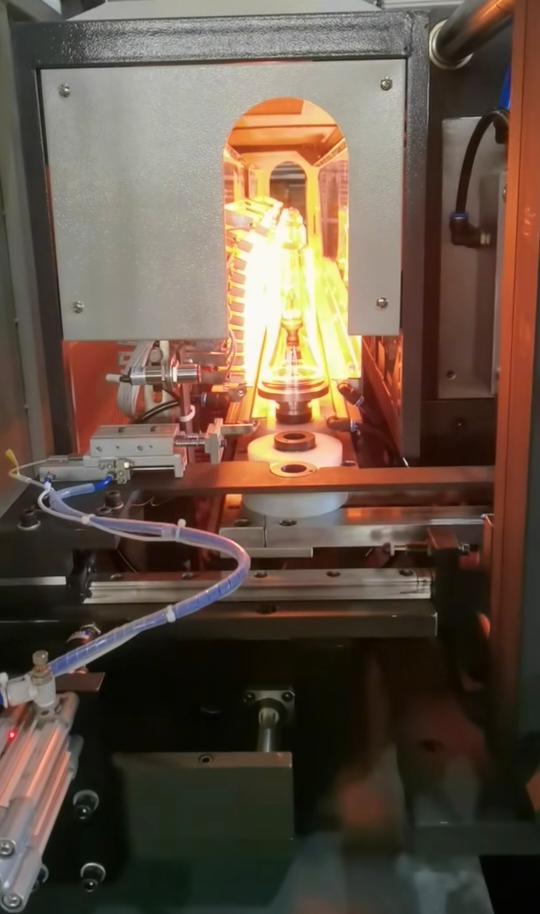
On a blow molding line, uneven preform heating shows up fast—inconsistent stretch, off-spec bottles, and scrap you simply can’t afford. The PETC preform heating radiator is built to drop in as a direct replacement for OEM-matched infrared emitters. You get repeatable temperature profiles without having to re-tune the heating tunnel every time. Here’s what matters in the real world: energy density and controllability. We run short-wave infrared halogen emitters with quartz envelopes, hitting 200–250 W/cm² peak output with a 1–2 second thermal response. The radiator is configured for standard voltages—220–240 V or 380–400 V, depending on the setup—and wired to industry-standard R7s connectors. Dimensions are matched to OEM mounting, so you swap in the same envelope and keep your reflector geometry intact. Stable heating is what stabilizes the stretch blow molding process. When preform skin temperature is uniform across the heating tunnel, you see fewer thin spots, tighter weight control, and a cleaner distribution on critical dimensions. In practice, that means less scrap and fewer manual interventions. Energy use drops too, because the emitter heats fast and cools fast—no idle losses sitting in the tunnel. A couple of practical notes. The PETC radiator is designed as a direct replacement, but the heating window is sensitive to line speed and preform geometry. Confirm the wattage and length match your machine’s OEM specification, and check tunnel airflow and reflector condition before installation. If you run frequent format changes, set a preventive calibration schedule—emitter output drift is small, but it can add up over thousands of hours.